czasownik “to have” – zasady, przykłady , użycie
“to have” -> oznacza „mieć” , „posiadać”
to have: Jeden z najważniejszych czasowników podobnie jak “to do”, “to be” , służy także jako czasownik posiłkowy (auxiliary verb) w budowie czasów Perfect.
Have: formy
| Bezokolicznik | Przeszłość – Past Simple | imiesłów bierny czas przeszły – Past Participle |
|---|---|---|
| have | had | had |
HAVE – w czasie Present Simple dla osóby he, she, it -> jest forma HAS
HAVE jako czasownik posiłkowy, dla czasów Present Perfect i Past Perfect.
“to have ” – Present Simple – forma twierdząca
| Osoba | Forma have/has | Przykład |
|---|---|---|
| I | have | I have a dog. |
| You | have | You have a nice car. |
| He | has | He has a sister. |
| She | has | She has a new phone. |
| It | has | It has four legs. |
| We | have | We have a meeting today. |
| You | have | You have many friends. |
| They | have | They have a house. |
W formie continuous HAVE zamieniasz na HAVING.
W czasach Perfect HAVE zamieniasz na HAD.
“to have ” – Present Simple – forma przecząca (negative)
| Osoba | Forma do not / does not + have | Przykład |
|---|---|---|
| I | do not have (don’t have) | I do not have a car. |
| You | do not have (don’t have) | You do not have time. |
| He | does not have (doesn’t have) | He does not have a bike. |
| She | does not have (doesn’t have) | She does not have a dog. |
| It | does not have (doesn’t have) | It does not have wheels. |
| We | do not have (don’t have) | We do not have a plan. |
| You | do not have (don’t have) | You do not have tickets. |
| They | do not have (don’t have) | They do not have money. |
“to have ” – Present Simple – forma pytania (question)
| Osoba | Forma Do / Does + osoba + have | Przykład |
|---|---|---|
| I | Do I have…? | Do I have a chance? |
| You | Do you have…? | Do you have a pen? |
| He | Does he have…? | Does he have a car? |
| She | Does she have…? | Does she have a sister? |
| It | Does it have…? | Does it have a name? |
| We | Do we have…? | Do we have a problem? |
| You | Do you have…? | Do you have tickets? |
| They | Do they have…? | Do they have kids? |
“to have ” – Present Simple – forma pytanie przeczące (negative questions)
| Osoba | Forma Do/Does + osoba + not + have | Przykład |
|---|---|---|
| I | Do I not have…? / Don’t I have…? | Don’t I have a choice? |
| You | Do you not have…? / Don’t you have…? | Don’t you have time? |
| He | Does he not have…? / Doesn’t he have…? | Doesn’t he have a phone? |
| She | Does she not have…? / Doesn’t she have…? | Doesn’t she have a job? |
| It | Does it not have…? / Doesn’t it have…? | Doesn’t it have batteries? |
| We | Do we not have…? / Don’t we have…? | Don’t we have a meeting? |
| You | Do you not have…? / Don’t you have…? | Don’t you have tickets? |
| They | Do they not have…? / Don’t they have…? | Don’t they have a house? |

have = have got
HAVE = HAVE GOT
Uwaga! HAVE ma także formę HAVE GOT , obie znaczą to samo. Have got jest bardziej nieformalne , częściej używane w brytyjskim angielskim.
Porównianie HAVE vs HAVE GOT
Twierdzenie (affirmative)
| Osoba | HAVE | HAVE GOT | HAVE GOT -skrócona wersja |
|---|---|---|---|
| I | I have a car. | I have got a car. | I’ve got a car. |
| You | You have a dog. | You have got a dog. | You’ve got a dog. |
| He | He has a bike. | He has got a bike. | He’s got a bike. |
| She | She has a cat. | She has got a cat. | She’s got a cat. |
| It | It has a tail. | It has got a tail. | It’s got a tail. |
| We | We have a house. | We have got a house. | We’ve got a house. |
| You | You have tickets. | You have got tickets. | You’ve got tickets. |
| They | They have a plan. | They have got a plan. | They’ve got a plan. |
Let’s speak English.
Małe grupy.
DUUUŻA
SWOBODA
MÓWIENIA.
Czas się przełamać!



Przeczenia (negative)
| Osoba | HAVE – przeczenie | HAVE – przeczenie skrót | HAVE GOT – przeczenie | HAVE GOT – przeczenie skrót |
|---|---|---|---|---|
| I | I do not have… | I don’t have… | I have not got… | I haven’t got… |
| You | You do not have… | You don’t have… | You have not got… | You haven’t got… |
| He | He does not have… | He doesn’t have… | He has not got… | He hasn’t got… |
| She | She does not have… | She doesn’t have… | She has not got… | She hasn’t got… |
| It | It does not have… | It doesn’t have… | It has not got… | It hasn’t got… |
| We | We do not have… | We don’t have… | We have not got… | We haven’t got… |
| You | You do not have… | You don’t have… | You have not got… | You haven’t got… |
| They | They do not have… | They don’t have… | They have not got… | They haven’t got… |
Pytania (questions)
| Osoba | HAVE – pytanie | HAVE GOT – pytanie |
|---|---|---|
| I | Do I have…? | Have I got…? |
| You | Do you have…? | Have you got…? |
| He | Does he have…? | Has he got…? |
| She | Does she have…? | Has she got…? |
| It | Does it have…? | Has it got…? |
| We | Do we have…? | Have we got…? |
| You | Do you have…? | Have you got…? |
| They | Do they have…? | Have they got…? |
Pytania przeczące (negative questions)
| Osoba | HAVE – pytanie przeczące | HAVE – forma skrócone | HAVE GOT – pytanie przeczące | HAVE GOT – forma skrócone |
|---|---|---|---|---|
| I | Do I not have…? | Don’t I have…? | Have I not got…? | Haven’t I got…? |
| You | Do you not have…? | Don’t you have…? | Have you not got…? | Haven’t you got…? |
| He | Does he not have…? | Doesn’t he have…? | Has he not got…? | Hasn’t he got…? |
| She | Does she not have…? | Doesn’t she have…? | Has she not got…? | Hasn’t she got…? |
| We | Do we not have…? | Don’t we have…? | Have we not got…? | Haven’t we got…? |
| They | Do they not have…? | Don’t they have…? | Have they not got…? | Haven’t they got…? |
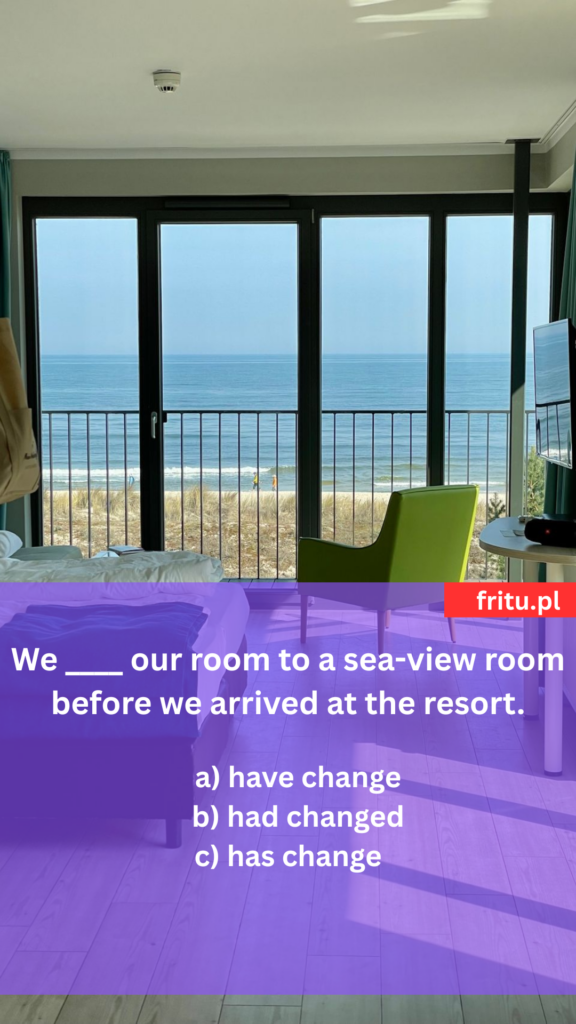
We had changed our room to a sea-view room before we arrived at the resort.
Zmieniliśmy nasz pokój na pokój z widokiem na morze, zanim dotarliśmy do kurortu.
b) had changed – to poprawna forma czasu Past Perfect, w tym czasie używamy “had” ( HAD + trzecia forma czasownika change -> changed) , żeby pokazać uprzedniość wobec innej czynności także w przeszłości – arrived (Past Simple). Had changed – zmieniliśmy, przed “arrived”dotarliśmy do kurortu.
Have jako czasownik posiłkowy (auxiliary verb), do budowania czasów Perfect np. Present Perfect i Past Perfect.
Present Perfect, osoba + have/has + 3 forma czasownika (past participle)
I have seen this movie.
Widziałem/Widziałam ten film.
You have finished your homework.
Skończyłeś/Skończyłaś swoją pracę domową.
She has visited London.
Ona odwiedziła Londyn.
They have bought a new car.
Oni/One kupili/kupiły nowy samochód.
He hasn’t called me.
On do mnie nie zadzwonił.
We haven’t eaten yet.
Jeszcze nie jedliśmy/nie jadłyśmy
Have you seen this?
Widziałeś/Widziałaś to?
Has he arrived?
Czy on przyjechał? / Czy on dotarł?
Have they left?
Czy oni/one wyszli/wyszły? / Czy już odjechali?
Past Perfect, osoba + had + 3 forma czasownika (past participle)
The car was dirty, he hadn’t cleaned it for weeks.
Samochód był brudny, on nie czyścił go od tygodni.
She had studied English before moving to London.
Ona uczyła się angielskiego przed przeprowadzką do Londynu.
They had bought a house before the baby was born.
Oni kupili dom, zanim urodziło się dziecko.
She hadn’t studied enough, so she failed the exam.
Ona nie uczyła się wystarczająco dużo, więc oblała egzamin.
You hadn’t seen it before, so you were very surprised.
Nie widziałeś/widziałaś tego wcześniej, więc byłeś/byłaś bardzo zaskoczony/zaskoczona.
We hadn’t brought a map, so we got lost in the city.
Nie zabraliśmy ze sobą mapy, więc zgubiliśmy się w mieście.
We had changed our room to a sea-view room before we arrived at the resort.
Zmieniliśmy nasz pokój na pokój z widokiem na morze, zanim dotarliśmy do kurortu.
Jeszcze jest tyle do odkrycia….
-
Kiedy? Gdzie? Jak? Czy potrafisz pytać w języku angielskim?
Zadawanie pytań to niezwykle przydatna część rozmowy. Pytamy głównie po…
-
Jak zadawać pytania po angielsku? Poznaj zasady, które uratują Cię w podróży i pracy.
Rozmowa to nie tylko zdania twierdzące…niezwykle istotną częścią każdej rozmowy…
-
Jeśli pojadę do Włoch, zjem prawdziwą pizzę. — zdania warunkowe w angielskim, jasno wyjaśnione i dużo przykładów.
Jeśli nie masz biletu, nie możesz wejść do środka. Jeśli…
-
Nie widziałeś jej dziś? Ona nie była jeszcze w Grecji. Jak używać Present Perfect – jasne zasady i praktyczne przykłady.
Present Perfect jest bardzo często używany w języku angielskim, dlatego…
-
Czy zamierzasz jechać na wakacje? Sprawdź, jak naprawdę używać „be going to” – prosto wyjaśnione zasady i dużo przykładów.
Jak zamierza Pani płacić? Kiedy zamierzasz wysłać e mail do…
-
Kiedy używać czasownik z -ing, z „to”, a kiedy bez “to”? Najłatwiejsze wyjaśnienie, czasownik w języku angielskim.
Czy wiesz, kiedy używać to learn, kiedy learning, a kiedy…
-
Szybko, wygodnie i poprawnie: stopniowanie przysłówków w języku angielskim — prosto i z wieloma przykładami
jesteś na lotnisku London Stansted Airport…Spieszy Ci się, więc musisz…
-
Jak? Gdzie? Kiedy? Szybko, skutecznie, tutaj i teraz. Sprawdź, jak stosować adverbs w języku angielskim
Bardzo często potrzebujemy opisać sytuację — powiedzieć, jak coś zostało…
-
Kiedy użyć since lub for? A może wciąż mówisz „in last week”? Ten artykuł Ci pomoże.
Nawet mówiący już po angielsku mają z tym problem. Since,…
-
Wciąż mylisz AT/IN/ON? Sprawdź, jak poprawnie określać czas po angielsku.
Czy mieliście spotkanie z klientem w zeszłym tygodniu? 28 lipca…